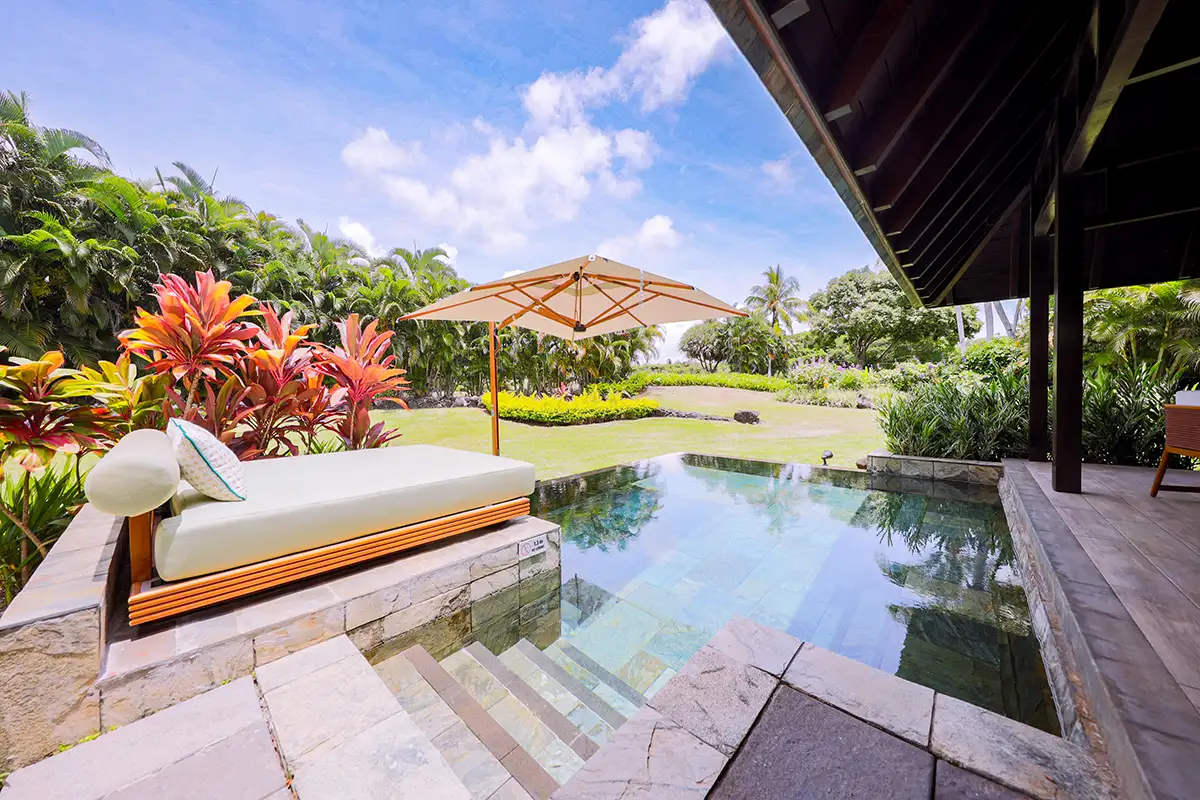
Villas inside the Four Seasons Anahita rental programme are rented by the resort to its own guests at five-star rates when the owner is away; the owner keeps 56 nights of personal use per year and receives a share of the income with owner reporting, while the resort handles marketing, housekeeping, maintenance and guest service. For the renovated RIVEO collection the programme is part of the sale. On the resale market it is villa by villa: some villas are in the mandatory pool, others were withdrawn by their owner for private use, and a few older villas can only rejoin after a renovation to the 2025 standard. Owners pay the estate and resort charges and the villa's own consumption; income depends on typology, season and the programme terms, and must be confirmed on the owner's contract.
What the resort does, and what you keep
In the programme the villa joins the Four Seasons inventory: it is sold through the brand's global distribution, serviced by the resort's staff, inspected and maintained by the residences team, and you receive owner statements. The 56 nights of owner use are the standard quoted by RIVEO and by the agencies on their listings; some contracts express it as eight weeks. Outside those nights the villa is available to guests, which is exactly what makes the income possible.
What you keep besides the nights: full freehold ownership under Anahita's IRS scheme, the right to sell at any time, access to the resort, the Anahita Owners Club and the Ernie Els golf course, and the Mauritian tax regime — no capital gains tax, no annual property tax, no inheritance tax. What you pay: estate and resort charges (quoted per villa), the villa's own water and electricity, and the resort's share of the rental income as set in the programme.
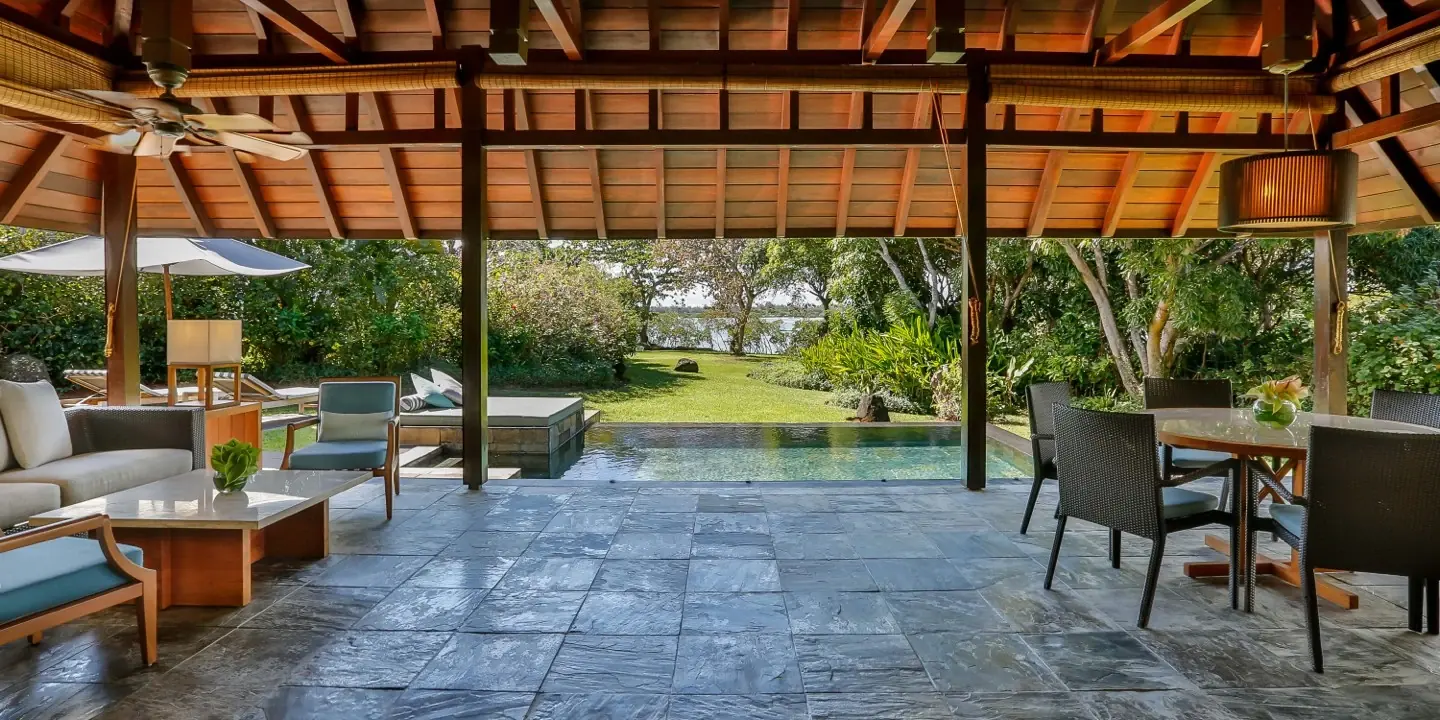
Inside or outside the pool: check before you sign
Inside the resort, two regimes coexist and every villa belongs to one of them. The Rental Pool: 56 days of owner use a year, the villa rented by Four Seasons the rest of the time, the highest income — and the more days the owner uses, the lower the income. The Flexible Program: the owner stays as many days as they wish; the villa can still be rented, but the resort always gives priority to pool villas, so income is lower. The resale market shows all three situations at once. Villas in the mandatory pool are sold with documented income and the 56-night rule attached. Villas withdrawn from the pool — the two lake villas listed by Sotheby's in September 2026, for instance — are sold for unrestricted private use, with complimentary access to the resort but no rental income. And some original villas are offered with a mandatory renovation to re-enter the new-generation programme, a cost the buyer must add to the asking price.
Before signing, ask for the owner's rental agreement, the last two years of owner statements if the villa is in the pool, the estate charges, and the renovation scope if any. GADAIT obtains these documents during due diligence and enrols the villa in the inventory after completion when that is the plan. Income figures on this page are directional, never guaranteed; the programme terms are set by the resort and can change.
Sources
Primary and expert sources behind this answer:
- RIVEO — Four Seasons Private Residences Mauritius at Anahita, official sales site & 2025 brochure ↗
- GADAIT — Four Seasons Private Residences Anahita: villas, prices & resale market (checked 9 September 2026) ↗
- Anahita Property — official estate sales office, Four Seasons villas & resale listings ↗
- Mauritius Revenue Authority (MRA) — Registration duty, VAT, income tax and capital gains ↗
This page is general information, not legal or tax advice. Mauritian property, residence, succession and tax rules are technical and change frequently — notably the 1 July 2026 registration-duty change. Every figure and rule here must be confirmed with a Mauritian notary (notaire), a tax adviser (fiscaliste) or a lawyer for your specific situation before you act.

Luxury buyer's agent, on the buyer's side only — Mauritius, Dubai, Marbella, Greece, the Maldives and the French Alps. Every price and every rule on this page is sourced (developers, sales offices, official EDB/MRA texts) and dated; pages are re-verified quarterly.
Our editorial method →Related questions
Buying property in Mauritius? Get an independent read first.
GADAIT is an independent luxury buyer's agent. We confirm the scheme, the tax, the residence reality and the real all-in cost for your specific case — before you commit.
Newsletter
Be among the privileged.
Subscribe to the Gadait International newsletter and receive the latest trends in the luxury market, along with exclusive opportunities for exceptional properties in advance.
Low frequency. High relevance.