The Seychelles can be visited all year round: the air stays warm (average daily highs of about 27–30 °C on Mahé) and cyclones rarely affect the main granitic islands. What changes is the wind. According to the Seychelles Meteorological Authority, the north-west monsoon peaks in January, the wettest period; April is the month of the monsoon reversal, with light winds and a very calm sea; the south-east trades blow from May and peak in July and August, when the sea can get rough; winds weaken considerably in October, the month with the most dry days. In our reading, April–May and October–November are the most comfortable windows for a villa stay with boat trips and snorkelling. July–August are cooler and drier, but windier.
The year, month by month
Wind and sea conditions follow the Seychelles Meteorological Authority’s climate guide. Rainfall and sea temperatures are long-term averages for Mahé; Praslin follows the same pattern, with local variations.
| Month | Wind (SMA) | Rain, Mahé (mm) | Sea (°C, approx.) | In our reading |
|---|---|---|---|---|
| January | North-west monsoon at its peak | 381 | 28 | Hot, wettest period |
| February | North-west, still predominant | 279 | 29 | Warm, humid; sea fairly good |
| March | North-west weakening | 189 | 29 | Rain decreasing; good |
| April | Monsoon reversal, light winds | 178 | 30 | Very calm sea; excellent for boating |
| May | South-east trades set in | 133 | 29 | Few rain days; very good |
| June | South-east, well established, windy | 66 | 27 | Dry, breezy, choppy at times |
| July | South-east trades at their peak | 81 | 26 | Coolest, driest; rough sea |
| August | South-east trades at their peak | 117 | 26 | Windy; rainfall varies a lot by year |
| September | South-east, declining | 134 | 27 | Still windy, easing |
| October | Winds weaken considerably | 206 | 28 | Most dry days; excellent |
| November | Winds drop, swing west | 223 | 28 | Rains return; sea pleasant |
| December | Light winds | 271 | 28 | Wet and humid; festive high season |
Wind: Seychelles Meteorological Authority, Seychelles Climate Guide. Rain and sea temperature: Weather2Travel averages for Mahé. Both checked 11 November 2026. Published sea-temperature averages differ by 2–3 °C between sources in July–September: count on roughly 25–30 °C over the year. Last column: our reading.

Trade winds, beaches and seaweed
The wind decides which beaches are calm. When the south-east trades blow, from May to September, the coasts facing south-east are more exposed and some beaches can collect seaweed; when the north-west monsoon returns, the pattern reverses. Quantities vary by season and by year, so we do not promise a seaweed-free beach on given dates.
In our reading, a villa with its own pool keeps every day easy whatever the wind, and a driver lets you choose the sheltered side of the island on the day.
Cyclones, school holidays and booking
January is also the peak of the cyclone season over the south-west Indian Ocean, but according to the Seychelles Meteorological Authority these storms usually curve south and rarely affect the main granitic islands; the season officially ends in April.
Christmas and New Year fall in the wet, humid season but remain a high season for demand. For our beachfront villa on Praslin, Christmas and New Year come with specific terms, on request; the rest of the year, the rate starts at €5,917 per night with a seven-night minimum.
Sources
Primary and expert sources behind this answer:
- Seychelles Meteorological Authority — Seychelles Climate Guide (checked 11/11/2026) ↗
- Weather2Travel — Seychelles climate guide, Mahé averages (checked 11/11/2026) ↗
- GADAIT — villa listing, Praslin (checked 11/11/2026) ↗
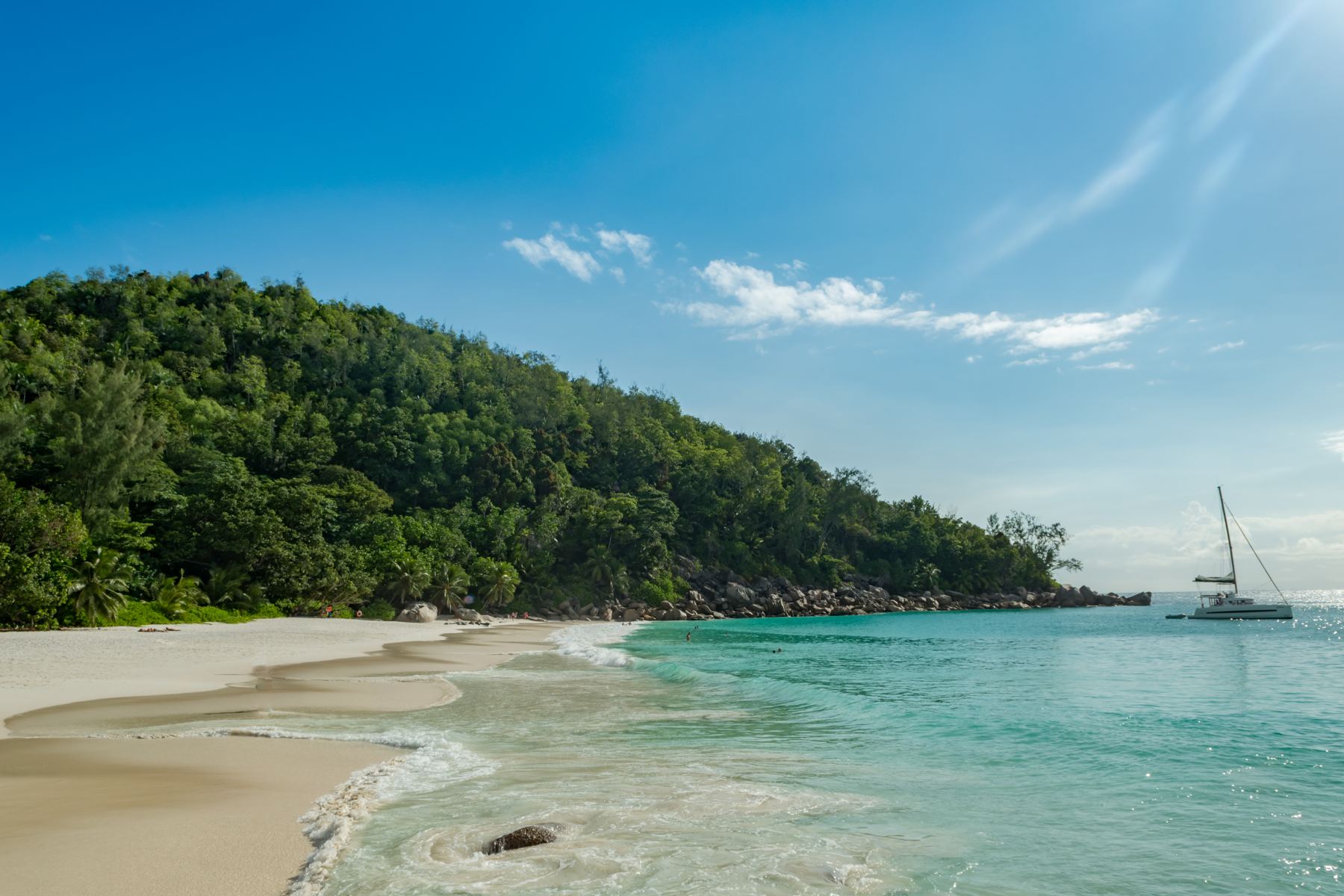
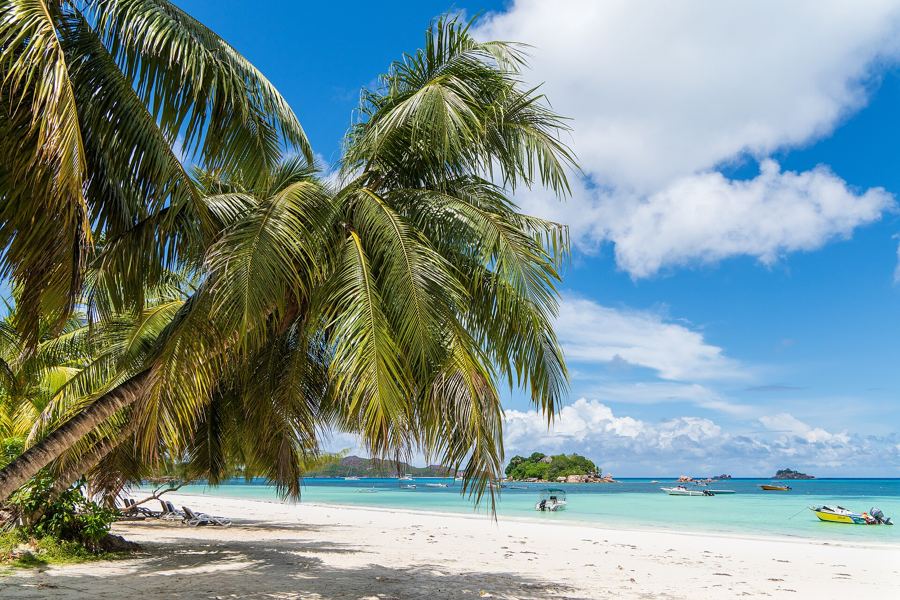
- Photo Anse Georgette: dronepicr, CC BY 2.0, via Wikimedia Commons ↗
This page is general travel information. Facts were checked on 11 November 2026 against the sources named on each page and against the villa’s listing; where a statement is our own reading, the page says so. Opening hours, fees, flight schedules and services change and must be confirmed for your dates. Rates are starting prices, confirmed in writing for your exact dates.

Luxury real-estate and stay advisory. The homes mentioned on this page are part of the GADAIT holiday collection; an advisor confirms availability and the rate in writing, for your dates. Every fact on this page is sourced (the property’s listing, named public sources) and dated; pages are re-verified quarterly.
Our editorial method →Frequently asked questions
What is the best month to go to the Seychelles?
There is no single month. In our reading, April–May and October–November combine light winds, a calm sea and warm water; the Seychelles Meteorological Authority describes April as the month of the monsoon reversal, and October as the month with the most dry days.
When is the rainy season in the Seychelles?
The wettest period is during the north-west monsoon, with January at its peak according to the Seychelles Meteorological Authority. Showers are often short; the air stays warm.
Are there cyclones in the Seychelles?
January is the peak of the cyclone season in the south-west Indian Ocean, but these storms rarely affect the main granitic islands — Mahé, Praslin, La Digue — according to the Seychelles Meteorological Authority.
Is July a good time to visit?
It is the coolest and driest period, which many travellers enjoy, but the south-east trades peak in July and August and the sea can be rough. In our reading, it suits a villa stay focused on the house and the land more than on boat trips.
Related questions


Explore our guides and listings

Planning a villa holiday in the Seychelles? Talk to us first.
A GADAIT advisor checks your dates with the villa, confirms the rate in writing and helps you arrange the rest of the stay — the flight or ferry to Praslin, transfers, boat trips. At our beachfront villa on Praslin, the chef and butler are already included.
Newsletter
Be among the privileged.
Subscribe to the Gadait International newsletter and receive the latest trends in the luxury market, along with exclusive opportunities for exceptional properties in advance.
Low frequency. High relevance.
Privacy