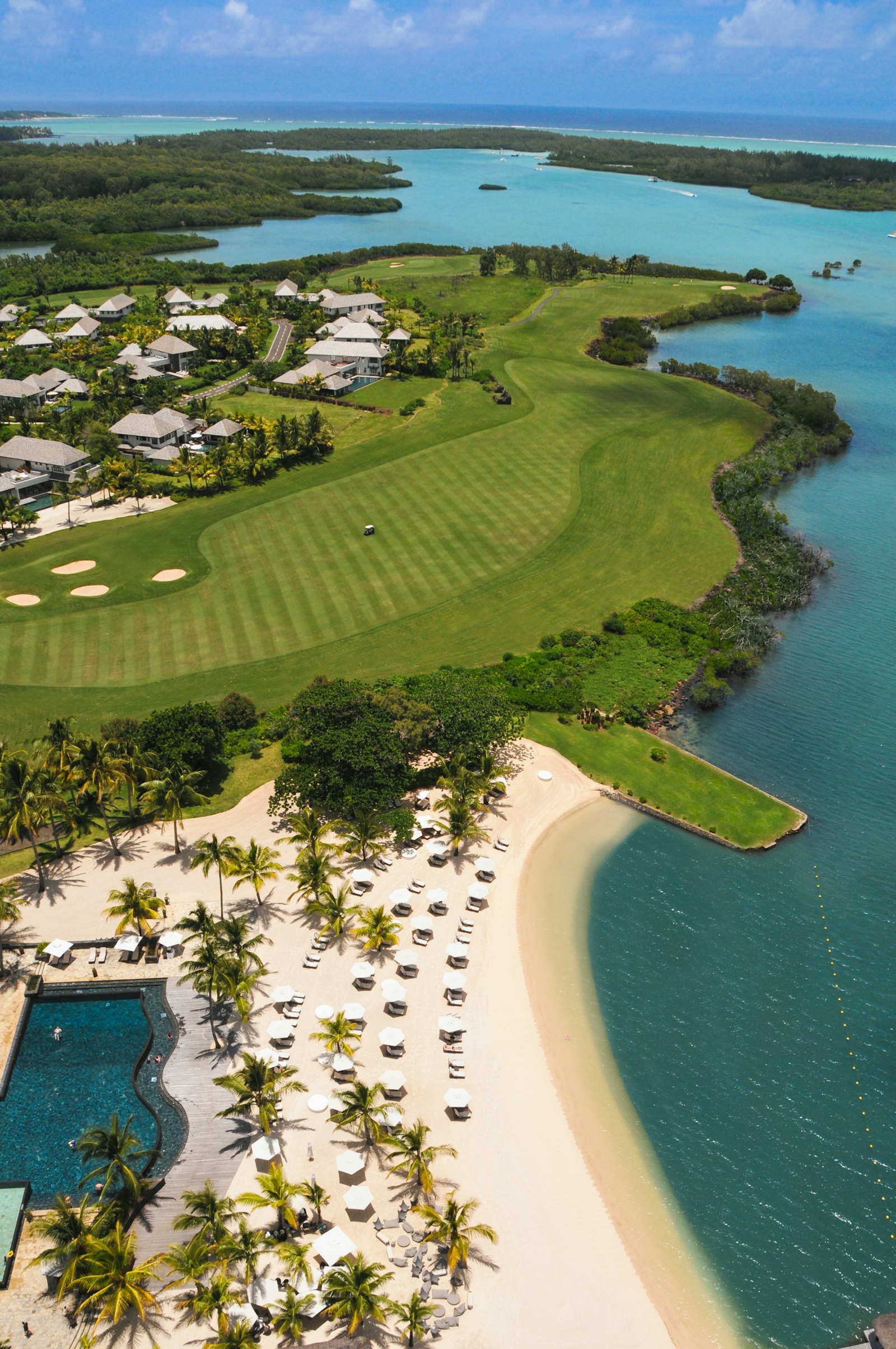
Mauritius in 2026: A Small Market That Has Repriced Fast
Last reviewed July 2026 · GADAIT advisory team · Mauritius desk
Mauritius has one genuinely robust public price benchmark: the Residential Property Price Index (RPPI), base 100 in 2019, built on Registrar-General deed data by Statistics Mauritius and published each quarter by PropertyCloud.mu — the reference cited internationally by Global Property Guide. On that index, prices exceeded 237.9 at end-2024 (a record, up 29.8% year-on-year), a cumulative rise of about 140% since 2019, and reached roughly 247.8 in Q2 2025, with Q3 2025 still up 13.89% year-on-year.
At transaction level, PropertyCloud.mu reported a 2025 average listing price of MUR 34.4M (≈ USD 740,000) for foreign-buyer-eligible property, up 12.62% year-on-year, while houses averaged MUR 29.9M and apartments MUR 20.5M. Notably, no advisory agency on the island had published a dated, sourced market report before this one — the leaders sell inventory; the data sits with a portal and the statistics office. GADAIT closes that gap.
“Mauritius has doubled in six years on the RPPI, but the number that matters in 2026 is not the past growth — it is the repealed 10% duty (Mauritius kept acquisition costs at 5%) and the fact that liquidity is real only in a handful of coastal schemes. We advise clients to buy the address, the scheme and the exit, in that order. A sourced index protects you from the sales pitch.”
Prices by Region: 10 Key Zones
Mauritius is not one market. The north and west concentrate liquidity and tourist rental demand; the east holds the ultra-prime branded stock; the centre offers steadier long-let flows. The ranges below are directional prime-property figures — treat them as an order of magnitude, not a valuation.
| Zone | Prime range (MUR/m²) | ≈ €/m² | Best for |
|---|---|---|---|
| Grand Baie | MUR 185,000–220,000/m² | ≈ €3,800–4,500 | Flagship north, liquidity, PDS/IRS villas |
| Tamarin | MUR 155,000–190,000/m² | ≈ €3,200–3,900 | West-coast lifestyle, 15–20% below Grand Baie |
| Rivière Noire / Black River | MUR 180,000–230,000/m² | ≈ €3,700–4,700 | Marina, kitesurf, prime villas |
| Beau Champ (East) | MUR 180,000–260,000/m² | ≈ €3,700–5,300 | Ultra-prime, Anahita, branded residences |
| Île aux Cerfs / East lagoon | MUR 200,000–300,000/m² | ≈ €4,100–6,100 | Scarcity, golf, resort frontage |
| Bel Ombre (South) | MUR 150,000–210,000/m² | ≈ €3,100–4,300 | Golf & beach PDS, emerging south |
| Péreybère | MUR 150,000–200,000/m² | ≈ €3,100–4,100 | North, rental demand, apartments |
| Flic en Flac | MUR 130,000–190,000/m² | ≈ €2,700–3,900 | West beach, mixed rental |
| Moka (Smart City) | MUR 120,000–180,000/m² | ≈ €2,500–3,700 | Central, schools, stable long-let flows |
| Floréal | MUR 100,000–150,000/m² | ≈ €2,000–3,100 | Highland residential, cooler climate |
Directional prime-property ranges from 2026 regional market reviews (PropertyCloud.mu and agency market reports) and GADAIT desk estimates. Grand Baie, Tamarin and Rivière Noire ranges are anchored in published 2022–2024 figures (~MUR 160,000–220,000/m² in iconic areas, +~10% 2022–24); other zones are GADAIT desk estimates. MUR figures converted at ~MUR 49 = €1 (July 2026); use as an order of magnitude, not a fixed rate.
Browse by zone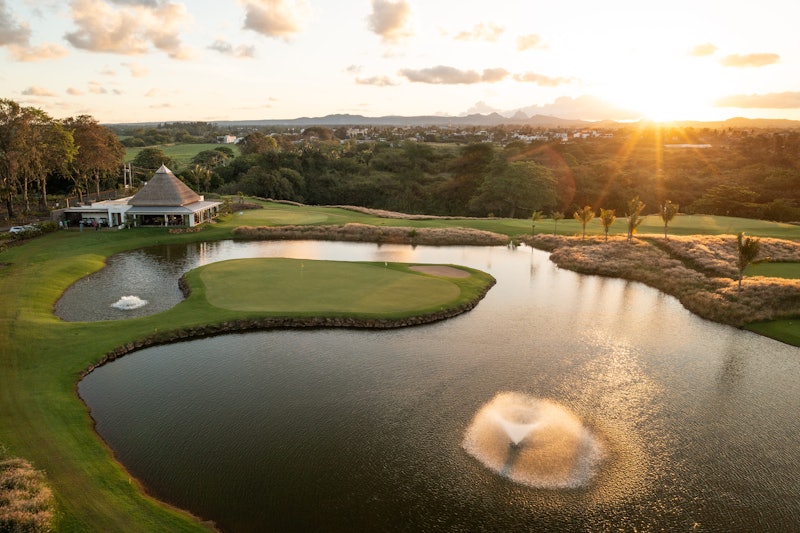
Where the Market Actually Trades
Grand Baie & the North (Péreybère)
Grand Baie is the island's flagship luxury market and its most liquid: the bay concentrates million-dollar villas, PDS and IRS residences and Smart City programmes. Published figures put luxury prices around MUR 185,000/m² in 2022 rising to ~MUR 210,000/m² by 2024 (+13.5%). Neighbouring Péreybère adds apartment stock with strong short-let demand. This is where resale is easiest — a decisive point for non-resident buyers.
Tamarin & Rivière Noire (West)
The west coast trades on lifestyle — surf, marina, kitesurf and sunset lagoons. Prime prices in Rivière Noire and Tamarin often exceed MUR 200,000/m², though Tamarin and Cap Tamarin typically sit 15–20% below Grand Baie, offering a calmer, value-oriented alternative for families and remote workers.
Anahita, Beau Champ & the East
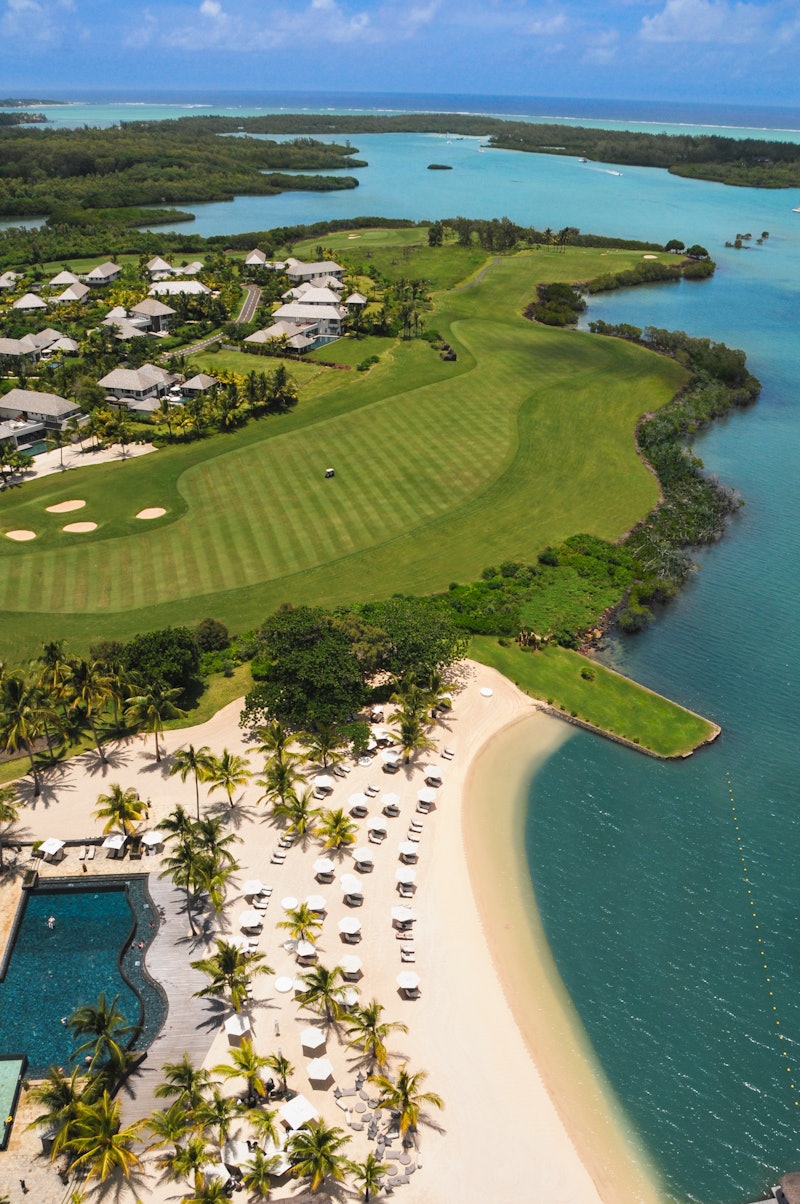
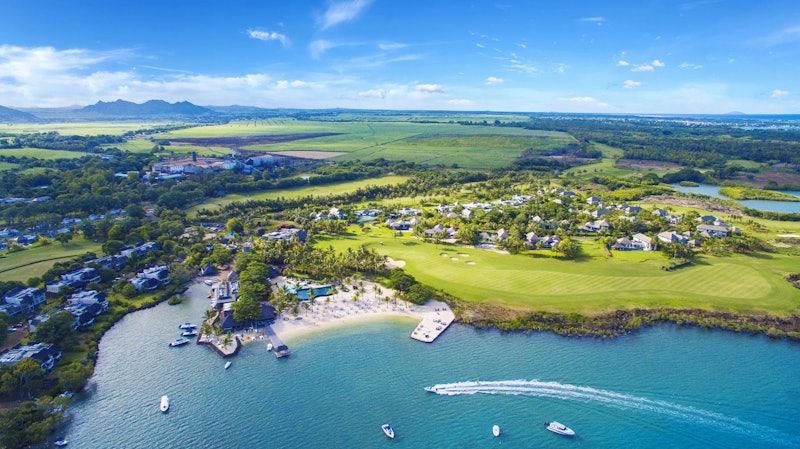
The east coast holds the ultra-prime, branded stock and records the highest average listing prices on the island. Anahita — an EDB-approved golf-and-lagoon estate — anchors the segment, with Four Seasons Private Residences (now sold out) and One&Only Private Homes supporting top valuations. Île aux Cerfs frontage and resort-managed rental pools define the top of the market here.
Bel Ombre & the South
The south is the island's emerging luxury frontier: golf-and-beach PDS estates and a quieter, more natural setting. Entry pricing is generally below the north, which is precisely the thesis — buyers position ahead of infrastructure and brand maturation.
Moka Smart City & the Centre
Inland demand is rising: the centre generated about 28% of enquiries despite ~15% of listed supply. Moka Smart City, with international schools, offices and green design, drives steadier long-let and corporate rental flows — a different risk profile from the coast, favoured for stability over tourist yield. Floréal adds cooler-climate highland residential stock.
What Is Moving the Market
- Residency-driven foreign demandForeign buyers acquire almost exclusively through EDB-approved schemes — PDS, IRS, RES, Smart City Scheme, Invest Hotel Scheme and qualifying G+2 apartments. A purchase from USD 375,000 opens a residence permit for the owner and dependants, which is the true engine of demand, not yield.
- The 10% duty? Repealed before taking effectThe Finance Act 2025 had scheduled a doubling (5% → 10%) of both registration duty and land transfer tax for deeds registered from 1 July 2026. The Finance Bill 2026 reversed both increases: buyer and seller each remain at 5%. A strong pro-investment signal that preserves the entry and exit math of the Mauritian market.
- Limited prime supply & construction costsThe Bank of Mauritius attributes sustained price growth — despite slower mortgage credit — to persistent demand-supply pressure, still-elevated construction costs and continued foreign interest. Prime buildable coastal land is scarce, which underpins values in established schemes.
- Branded residencesFour Seasons Private Residences at Anahita (sold out) and One&Only Private Homes have set a branded-ownership benchmark on the east coast, pulling the ultra-prime ceiling higher and validating operator-run rental pools for non-residents.
Who Is Buying, by Nationality
Foreign demand is concentrated among a few source markets. France and South Africa together accounted for roughly 42% of direct investment inflows into Mauritius in 2025 (EDB / PropertyCloud), and are the two dominant buyer nationalities.
| Origin | Position | Signal |
|---|---|---|
| France | Largest foreign-buyer group | ~23.5% of 2025 tourist arrivals; historic PDS/IRS anchor |
| South Africa | Fastest-growing source | ~MUR 4.66bn invested in 2024, +22.6% YoY |
| United Kingdom | Established segment | Golf, retirement and lifestyle relocation |
| Germany / EU | Secondary segment | Rental-pool and holiday-home demand |
Sources: Economic Development Board (EDB) and PropertyCloud.mu commentary, 2025–2026. Shares are directional and vary by scheme and year.
How Foreigners Buy — and What It Costs
Non-citizens buy within EDB-approved schemes. A purchase from USD 375,000 in an eligible scheme grants a renewable residence permit to the buyer and dependants for as long as the property is held.
- PDS — Property Development SchemeThe main route today: villas and apartments in approved resort-style developments, open to non-citizens with residency from USD 375,000.
- IRS / RES (legacy schemes)Integrated Resort and Real Estate Schemes — the earlier frameworks, still present in the resale market (Anahita, Grand Baie estates).
- Smart City SchemeMixed-use master-planned cities such as Moka — residential, offices, schools and green infrastructure, eligible for non-citizen ownership.
- G+2 apartmentsApartments in buildings of at least two floors above ground, purchasable by non-citizens (residency threshold applies at USD 375,000).
| Cost / tax | Rate | Note |
|---|---|---|
| Registration duty (EDB scheme, non-citizen) | 5% | Planned increase to 10% repealed by the Finance Bill 2026 |
| Land transfer tax (resale to non-citizen) | 5% | Planned rise to 10% reversed by the Finance Bill 2026 (seller side) |
| Notary fees | ~0.5–2% | Scale-based, on purchase price |
| Residence-permit threshold | USD 375,000 | Grants residence for owner + dependants |
Sources: Finance Act 2025 / National Budget 2025–2026, PwC Mauritius, KPMG and DECORDIER commentary. Always confirm current rates and thresholds with a Mauritian notary before committing.
Rental Yields & Where They Come From
Gross yields in Mauritius are moderate but backed by a genuine tourist economy and a European winter peak (November–April). Branded residences trade yield for a hands-off, operator-run rental pool.
| Zone | Property type | Occupancy | Gross yield |
|---|---|---|---|
| Grand Baie | 2–3-bed PDS apartment | High (Nov–Apr peak) | 4–6% |
| Tamarin / Black River | 3–4-bed villa, pool | Strong seasonal | 4–6% |
| Anahita / Beau Champ | Branded residence / golf villa | Managed rental pool | 3–5% |
| Flic en Flac | 2-bed apartment, beach | Steady | 4–6% |
| Moka (Smart City) | 2–3-bed apartment | Long-let, corporate | 4–5% |
Directional gross yields from 2026 market reviews and GADAIT desk observation; branded-residence yields of 3–5% reflect Anahita/east-coast managed pools. Net yields are lower after management, service charges and the July 2026 duty.
An Honest Read on the Risks
- Niche market, uneven liquidityResale is straightforward in Grand Baie, Tamarin and Anahita; it can be slow outside established coastal schemes. Buy where there is a genuine secondary market.
- Rising transaction costsThe 5%→10% duty from 1 July 2026 materially raises entry (and resale) costs — model it into any hold-period return.
- Regulatory & currency dependenceValue is tied to the continuity of the EDB residency schemes and to the Mauritian rupee. Both are stable today, but both are variables a serious buyer should weigh.
Price index: Residential Property Price Index (RPPI), base 100 in 2019, compiled by Statistics Mauritius on Registrar-General deed data and published quarterly by PropertyCloud.mu (237.9 at end-2024, +29.8% YoY, ~+140% cumulative since 2019; ~247.8 in Q2 2025; +13.89% YoY in Q3 2025) — also referenced by Global Property Guide. Average listing prices (foreign-eligible MUR 34.4M, houses MUR 29.9M, apartments MUR 20.5M, 2025): PropertyCloud.mu. Foreign-investment and buyer-nationality data: Economic Development Board (EDB) and PropertyCloud. Taxation: Finance Act 2025 / National Budget 2025–2026, PwC Mauritius, KPMG, DECORDIER. Per-zone MUR/m² ranges are directional estimates from 2026 regional market reviews and the GADAIT Mauritius desk, not formal valuations. MUR figures converted at ~MUR 49 = €1 (July 2026); use as an order of magnitude, not a fixed rate. Reviewed by the GADAIT Mauritius advisory desk, July 2026.
Why Work with GADAIT in Mauritius?
We advise on the coasts where the market actually trades — Grand Baie, Tamarin, Rivière Noire and Anahita — with a sourced view of prices, schemes and exit, not a sales pitch.
FAQ — Mauritius Real Estate Market 2026
There is no single national €/m² figure — Mauritius is a two-tier market. In the prime coastal belt (Grand Baie, Tamarin, Rivière Noire, Beau Champ) directional prime-property ranges run roughly MUR 155,000–260,000/m², or about €3,200–5,300/m² at ~MUR 49/€ (2026 regional market reviews, GADAIT desk). At national level, PropertyCloud.mu put the 2025 average listing price for foreign-buyer-eligible property at MUR 34.4M (≈ USD 740,000), up 12.62% year-on-year.
Yes, strongly. The official Residential Property Price Index (RPPI), base 100 in 2019 and calculated on Registrar-General deed data by Statistics Mauritius (published quarterly by PropertyCloud.mu), exceeded 237.9 at end-2024 — a cumulative rise of about 140% since 2019 — and reached roughly 247.8 in Q2 2025, with Q3 2025 up 13.89% year-on-year. Growth is expected to continue in 2026 but become more selective, per PropertyCloud and the Bank of Mauritius.
The Residential Property Price Index (RPPI) tracks residential transaction prices in Mauritius from a base of 100 in 2019. The underlying data comes from the Registrar-General (deeds) and is compiled by Statistics Mauritius; PropertyCloud.mu publishes and comments on it each quarter and is cited internationally by Global Property Guide. It is the market's most robust public price benchmark — and no advisory agency published a sourced report before this one.
Yes, but largely within schemes approved by the Economic Development Board (EDB): PDS (Property Development Scheme), IRS, RES, Smart City Scheme, Invest Hotel Scheme and qualifying G+2 apartments. Purchases at or above USD 375,000 in an eligible scheme also open a residence permit for the buyer and dependants. Outside these schemes, foreign ownership is restricted.
It was repealed before ever taking effect. The Finance Act 2025 had scheduled, for deeds registered from 1 July 2026, a doubling from 5% to 10% of both the registration duty on non-citizen acquisitions under EDB schemes (PDS, IRS, RES, Smart City, IHS, G+2) and the land transfer tax on resales to non-citizens. The Finance Bill 2026 reversed both increases: the rates remain at 5%. Sources: Finance Bill 2026, PwC Mauritius, EDB.
Directionally, the north and west — Grand Baie, Péreybère, Tamarin, Flic en Flac — offer the strongest tourist and mixed rental demand, with gross yields typically 4–6%. Branded residences at Anahita/Beau Champ run lower at 3–5% gross but offer a hands-off managed rental pool. The centre (Moka Smart City, Quatre Bornes) suits steadier long-let corporate flows at 4–5%.
French buyers remain the largest group of foreign purchasers. South Africa is the fastest-growing source — South African investment reached about MUR 4.66bn in 2024, up 22.6% year-on-year. France and South Africa together accounted for around 42% of direct investment inflows in 2025 (EDB / PropertyCloud). UK and German buyers make up much of the remainder.
The ultra-prime segment is concentrated on the east coast: Four Seasons Private Residences at Anahita (now sold out) and One&Only Private Homes support the island's highest valuations. Anahita, an EDB-approved estate, is the reference address for golf-and-lagoon branded ownership with an operator-run rental pool.
It is a niche market: liquidity is good in established coastal schemes (Grand Baie, Tamarin, Anahita) but thinner elsewhere, so resale can take longer outside prime zones. The planned July 2026 duty increase was repealed by the Finance Bill 2026 — entry and exit costs stay at 5% each. Value is also linked to the continuity of the residency schemes and to the rupee — honest advice weighs all three before committing.
Yes, within limits. A purchase from USD 375,000 in an EDB-approved scheme (PDS/IRS/RES/Smart City) grants a residence permit to the owner, spouse and dependants for as long as the property is held. It is a residence route, not automatic citizenship, and remains subject to the schemes staying in force — a point we flag to every client.
Properties & Guides
Newsletter
Be among the privileged.
Subscribe to the Gadait International newsletter and receive the latest trends in the luxury market, along with exclusive opportunities for exceptional properties in advance.
Low frequency. High relevance.