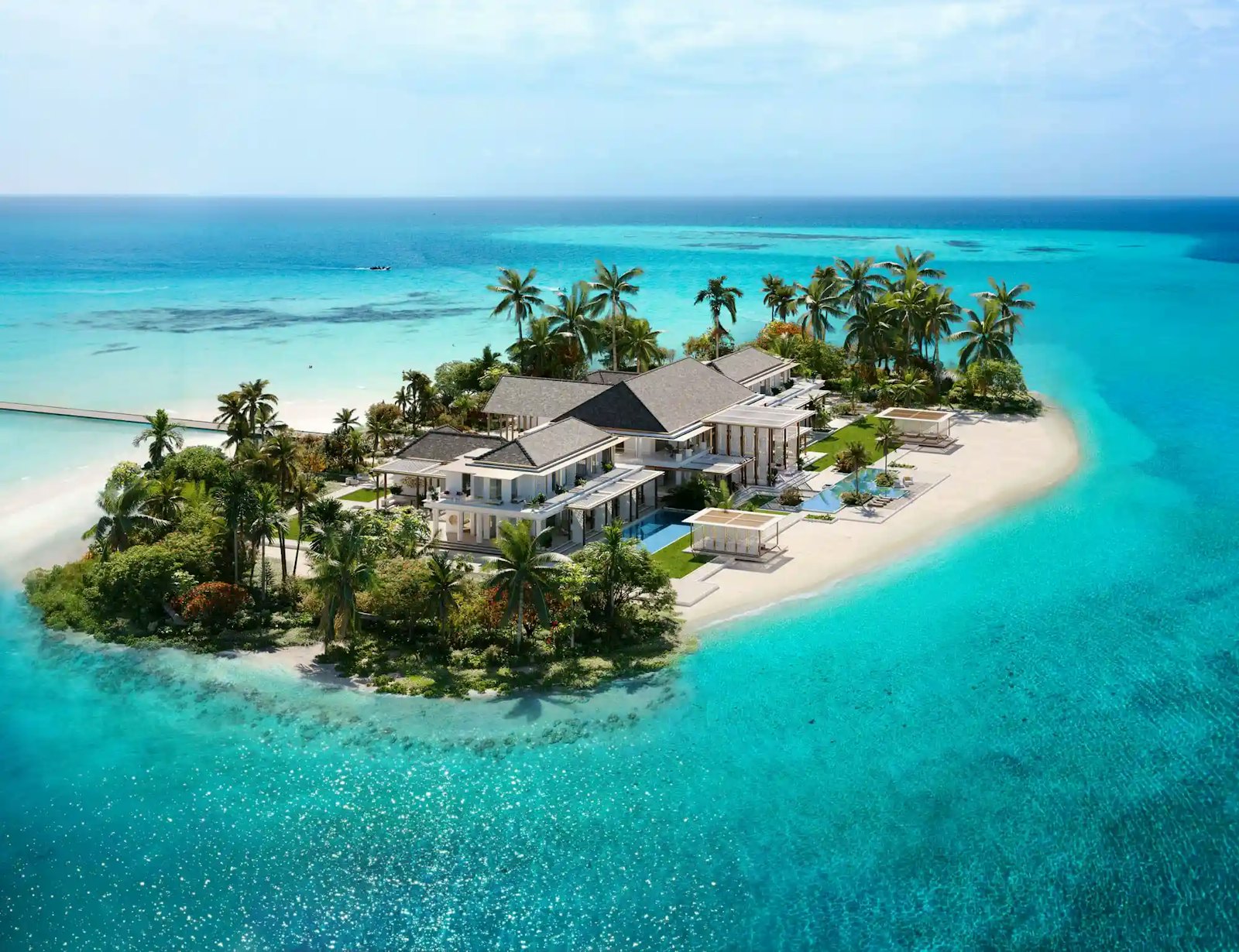
Yes — since July 2025 the Maldives operates the Pearl Residency Programme, which grants residence in exchange for a qualifying property investment. The entry threshold is around USD 250,000 for a strata unit in a designated zone, giving a renewable five-year residence permit with no minimum-stay requirement and coverage for the applicant's family. There are four designated zones (including Kaafu, with a fourth zone added in January 2026). One point is essential: the programme leads to residency only, not citizenship — the Maldives does not allow dual nationality, so a Pearl residence permit is not a path to a Maldivian passport. Confirm the current threshold, eligible zones and documentation with Invest Maldives or an authorised agent before relying on it.
How the Pearl Residency Programme works
The Pearl Residency Programme is a recent addition to the Maldives' investment framework, launched in July 2025 in partnership with Henley & Partners. Its core proposition is straightforward: invest at or above a set threshold — around USD 250,000 for a strata (branded-residence) unit in a designated zone — and receive a renewable five-year residence permit. Two features make it unusually flexible by international standards. First, there is no minimum-stay requirement, so the permit suits owners who want the legal right to reside without being obliged to spend a set number of days in the country. Second, the permit extends to the applicant's family, making it a household solution rather than a single-person one.
The programme is organised around designated zones rather than being available anywhere in the archipelago. At launch it covered a defined set of zones — including Kaafu atoll, the most accessible from Malé and the international airport — and a fourth designated zone was added in January 2026, signalling that the government intends to expand the footprint over time. Because eligibility is tied both to the investment threshold and to buying within an approved zone, the specific residence you are considering must sit inside a qualifying zone for the purchase to count toward Pearl residency. This is exactly the kind of detail to verify with Invest Maldives or an authorised agent before committing, since zones and thresholds can be adjusted.
The crucial limit: residency, not citizenship
The single most important thing to understand about Pearl residency is what it is not. It is a residence programme, not a citizenship-by-investment programme. The Maldives does not permit dual nationality, and — as an Islamic state whose citizenship is tied to being Muslim — it does not offer a purchase-based route to a Maldivian passport. So however long you hold a Pearl permit, it does not convert into citizenship, and you should disregard any marketing that blurs 'residency' into 'a second passport'. For most GADAIT clients this is not a drawback: the value of the programme is the flexible, family-inclusive right to reside tied to an asset they wanted to own anyway, not a passport.
Set against comparable schemes, Pearl residency reads as a lifestyle-and-mobility benefit layered on top of a branded-residence purchase, rather than a standalone migration strategy. If your objective is genuinely a change of nationality or a second passport, this is not the programme for it, and a different jurisdiction should be considered. If your objective is a renewable, low-obligation right to reside in the Maldives for you and your family — attached to a villa you will use and let — it fits well. The threshold, permit term, zone list and citizenship position summarised here come from the Pearl Residency materials (Henley & Partners with the Government of the Maldives) and Invest Maldives; confirm the current terms and eligibility for your specific residence with an authorised agent and a Maldivian lawyer.
Sources
Primary and expert sources behind this answer:
- Pearl Residency Programme — Government of Maldives with Henley & Partners (USD 250,000 strata threshold, 5-year renewable permit, designated zones) ↗
- Invest Maldives — Government investment agency (Pearl Residency zones, foreign-investment framework) ↗
This page is general information, not legal or tax advice. Maldivian ownership is a long-term leasehold, not freehold, and the lease, tax, residency and succession rules are technical and change frequently. Every figure and rule here must be confirmed with a Maldivian lawyer and the developer for the specific residence before you act.

Luxury buyer's agent, on the buyer's side only — Mauritius, Dubai, Marbella, Greece, the Maldives and the French Alps. Every price and every rule on this page is sourced (developers, sales offices, official EDB/MRA texts) and dated; pages are re-verified quarterly.
Our editorial method →Related questions
Explore our guides and listings
Buying a branded residence in the Maldives? Get an independent read first.
GADAIT is an independent luxury buyer's agent. We confirm the lease reality, the true net yield, the residency angle and the real all-in cost for your specific case — before you commit.
Newsletter
Be among the privileged.
Subscribe to the Gadait International newsletter and receive the latest trends in the luxury market, along with exclusive opportunities for exceptional properties in advance.
Low frequency. High relevance.