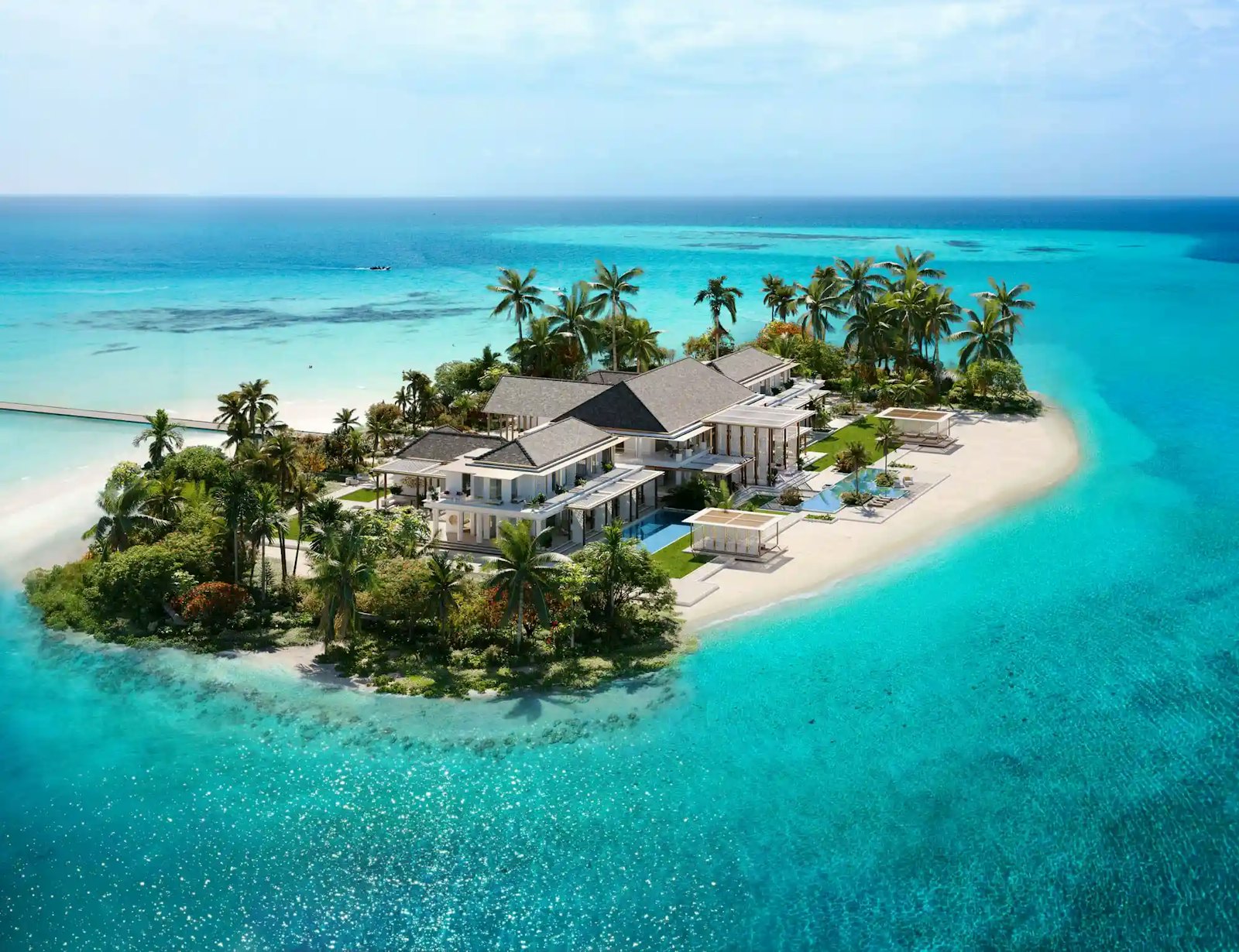
The '8–15%' figures developers advertise are gross, before the operator takes its share — and the net after fees is materially lower. Programmes vary widely: Soneva typically charges around 10% of rental revenue, then splits the balance roughly 50/50 with the owner, plus an annual service charge of about 1.5% of the price and about 0.5% a year into a reserve fund; Amilla takes around 10% of revenue; Kandima/Coral-type programmes take about 50% of net income but offer a 6% guaranteed return for the first five years. Realistically, a headline 8–15% gross often lands in the low-to-mid single digits net once all of this is deducted. Always model gross-to-net on the specific programme's contract, and have the numbers confirmed with the developer.
Why gross yield is the wrong number to buy on
Maldives branded residences are almost always sold with a rental-programme story attached, and the number that gets quoted is gross yield — the total rental revenue the villa generates, before anyone is paid. That figure can genuinely be high, because a night in an over-water villa on a five-star island commands an extraordinary rate. But the owner does not keep gross. Between the owner and that headline number sit, in varying combinations: the operator's management fee (a percentage of revenue), a revenue or profit split with the operator, the annual service charge that funds running the villa, and a sinking/reserve fund for major refurbishment. Each programme stacks these differently, which is why two residences advertising a similar gross can deliver very different net.
Take the disclosed programmes as illustrations. On a Soneva-style structure the operator takes roughly 10% of rental revenue off the top, then the remainder is split about 50/50 between operator and owner, and the owner separately carries an annual service charge of around 1.5% of the purchase price plus about 0.5% a year into a reserve fund. On an Amilla-style structure the operator's fee is around 10% of revenue. Kandima/Coral-type programmes are structured around a roughly 50% share of net income, softened by a 6% guaranteed return for the first five years — attractive for certainty, but the guarantee period ends. Stack any of these against a gross headline and the net shrinks quickly.
A gross-to-net worked example
Because no brochure shows this cleanly, here is a directional model for a single villa on a Soneva-style split, using the disclosed fee structure. It is illustrative — occupancy, achieved nightly rate and the exact contract terms drive the real outcome, and those must be confirmed programme by programme with the developer.
The pattern is what matters more than the exact euro figures: an eye-catching gross is roughly halved by the revenue split, trimmed again by the management fee, and then reduced further by the service charge and reserve — so a 'up to 12–15% gross' story can settle into low-to-mid single digits net. That is not necessarily a poor return for a trophy lifestyle asset you also use yourself, but it is a very different proposition from the advertised headline, and it should be modelled before purchase rather than after. Figures here are drawn from the published Soneva, Amilla and Coral/Kandima programme terms (via Sphere Estates and Private Islands Online) and Maldivian service-charge regulation; treat them as directional and confirm the current split, fee and charge on the specific contract.
| Line (Soneva-style split) | Basis | Effect on owner |
|---|---|---|
| Gross rental revenue | 100% | Headline figure |
| Operator management fee | ~10% of revenue | −10% |
| Owner / operator split | ~50 / 50 of the balance | Owner keeps ~45% of gross |
| Annual service charge | ~1.5% of price / yr | Fixed annual cost |
| Reserve / sinking fund | ~0.5% of price / yr | Fixed annual cost |
| Indicative net to owner | after all of the above | Low-to-mid single digits |
Illustrative and directional only — based on disclosed Soneva-style programme terms. Actual net depends on occupancy, achieved rate and the specific contract, and must be confirmed with the developer and a local adviser.
Sources
Primary and expert sources behind this answer:
- Sphere Estates — Soneva & Baccarat Maldives branded-residence programme sheets (rental split, management fees, personal-usage terms) ↗
- Private Islands Online — Amilla Maldives residence & rental-programme details (management fee, utilities, usage) ↗
- Premier Chambers (Maldives) — Service-charge and strata-management regulation for branded residences ↗
This page is general information, not legal or tax advice. Maldivian ownership is a long-term leasehold, not freehold, and the lease, tax, residency and succession rules are technical and change frequently. Every figure and rule here must be confirmed with a Maldivian lawyer and the developer for the specific residence before you act.

Luxury buyer's agent, on the buyer's side only — Mauritius, Dubai, Marbella, Greece, the Maldives and the French Alps. Every price and every rule on this page is sourced (developers, sales offices, official EDB/MRA texts) and dated; pages are re-verified quarterly.
Our editorial method →Related questions
Explore our guides and listings
Buying a branded residence in the Maldives? Get an independent read first.
GADAIT is an independent luxury buyer's agent. We confirm the lease reality, the true net yield, the residency angle and the real all-in cost for your specific case — before you commit.
Newsletter
Be among the privileged.
Subscribe to the Gadait International newsletter and receive the latest trends in the luxury market, along with exclusive opportunities for exceptional properties in advance.
Low frequency. High relevance.