Foreigners cannot own freehold land in the Maldives, but they can acquire branded resort residences on a long-term leasehold (up to ~99 years) within government-approved developments. Most assets run on a resort-managed leaseback model. Local mortgages are uncommon — buyers typically use developer payment plans, private-banking financing, or cash.
The Maldives: An Excellence Market, Not a Volume Market
The Maldives is one of the most exclusive luxury real estate destinations on the planet, defined by structural scarcity and world-class hospitality. The market is centred on branded resort residences, overwater villas and beachfront estates integrated into globally renowned resorts. Supply is naturally limited by geography, environmental constraints and strict development controls — scarcity that supports long-term value.
For international buyers, the appeal combines an unmatched lifestyle, recognised hospitality brands, a leaseback rental model operated by the resort, and exposure to ultra-luxury hospitality real estate. GADAIT curates ultra-premium villas and resort residences in the Maldives, providing off-market access and acquisition advisory for qualified buyers.
Can Foreigners Buy Property in the Maldives?
Foreigners cannot acquire freehold land in the Maldives. International buyers acquire through long-term leasehold — up to around 99 years — within government-approved developments and branded resort residences, subject to government approval. Most assets are structured as resort residences with defined usage rights and a leaseback model, rather than outright ownership of land.
In practice, this means an acquisition is a managed investment within a resort framework: the lease defines duration and transfer rules, the operator runs management and the rental programme, and revenue-sharing and maintenance obligations are set out contractually. Understanding the legal structure, lease terms, maintenance obligations and exit clauses is essential before committing.
Atolls & Branded Residences
Understanding the archipelago's micro-markets is essential before any commitment. Each atoll has a distinct access profile, buyer profile and investment thesis.
| Atoll | Access | Profile | Best For |
|---|---|---|---|
| North Malé Atoll | Speedboat 15–45 min | Closest · Best-connected | Liquidity, broadest offer |
| South Malé Atoll | Speedboat 30–60 min | Balance · Accessibility | Stable rental yields |
| Baa Atoll | Seaplane 25–35 min | UNESCO · Eco-prestige | Eco-luxury, very selective |
| Ari Atoll | Seaplane / speedboat | Whale sharks · Diverse | Price-to-isolation ratio |
Branded Resort Residences
The best-performing assets combine prime location, a recognised hospitality brand, strong execution standards and transparent governance. Branded residences typically provide better governance and service quality — a major factor for demand and resale.
| Brand | Atoll | Residence type | Why it matters |
|---|---|---|---|
| Soneva (Fushi / Jani) | Baa / Noonu | Eco-luxury villas, overwater | Pioneer of barefoot luxury |
| Patina Maldives | North Malé (Fari Islands) | Branded resort residences | Design-led, lifestyle hub |
| Ritz-Carlton Maldives | North Malé (Fari Islands) | Overwater & beach villas | Global brand, strong distribution |
| One&Only Reethi Rah | North Malé | Beach & water villas | Flagship ultra-luxury address |
| Baccarat Hotel & Residences | Malé atolls | Branded private residences | Brand equity, governance |

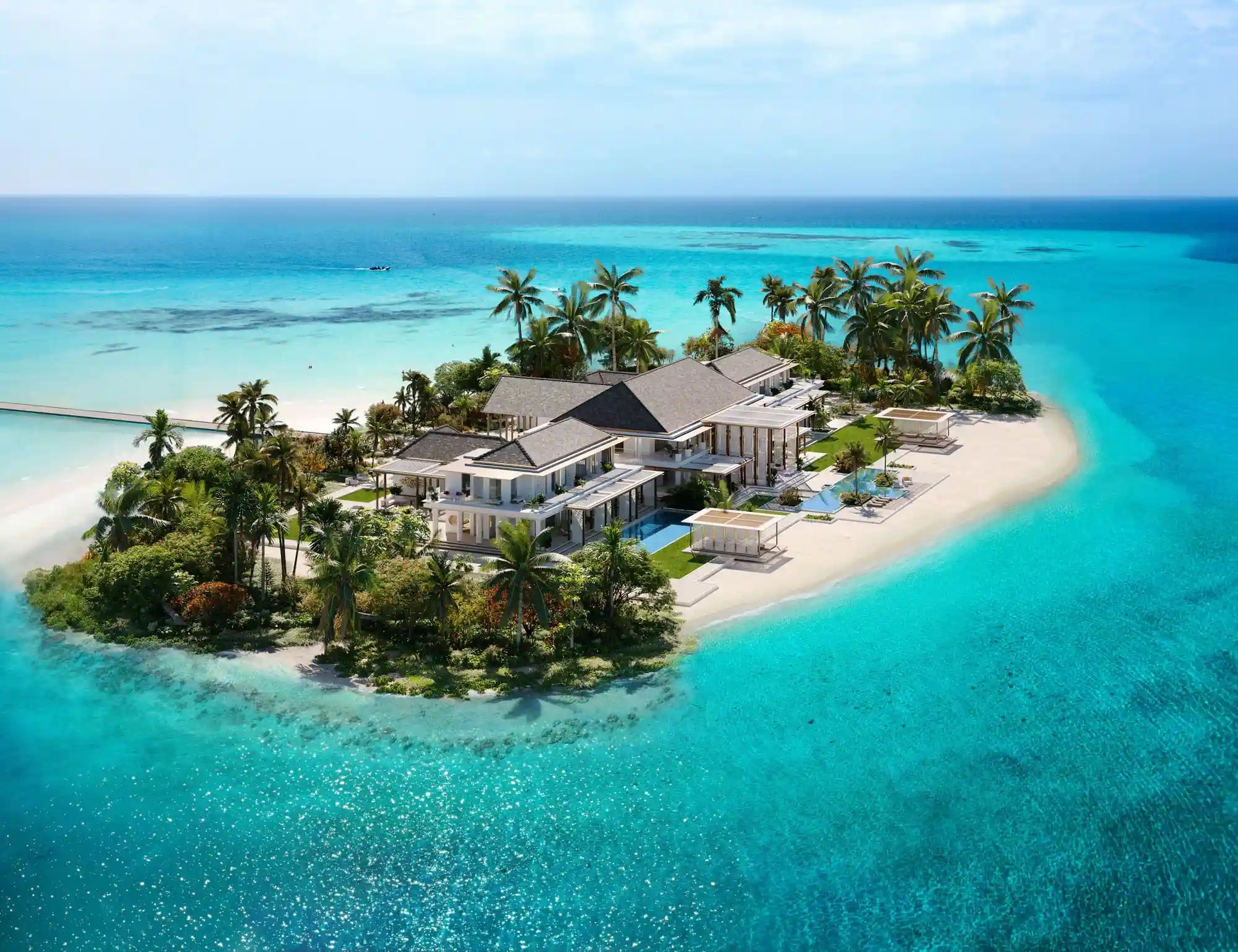
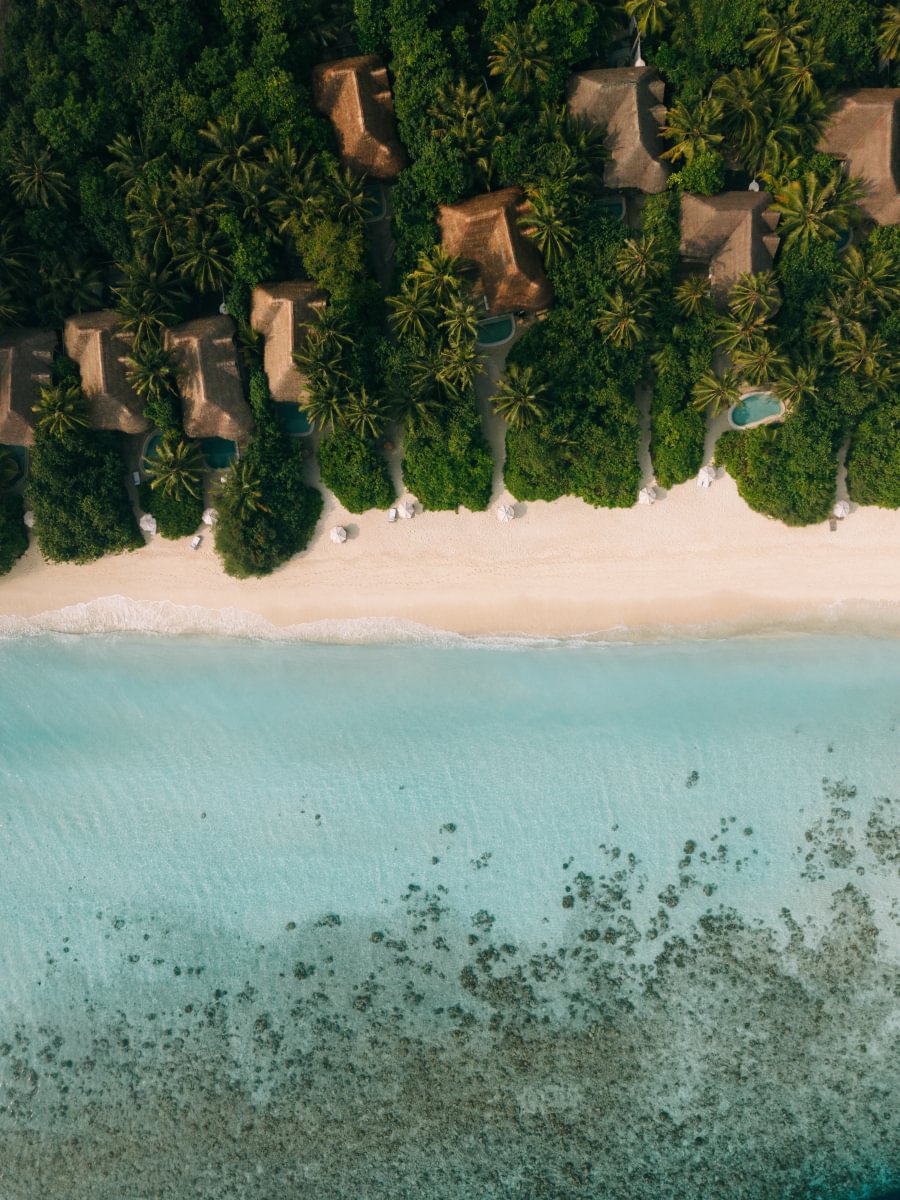
The Maldives' Branded Residences
A handful of branded-residence projects define ownership in the Maldives. Each pairs a globally recognised name with a specific atoll, format and stage — from the Baccarat Hotel & Residences now selling in South Malé, to the barefoot ultra-luxury of Soneva Private Residences and the forthcoming Aman Residences. The table below compares the five leading addresses and links through to each dedicated guide.
| Residence | Atoll / Location | Style | Status | Link |
|---|---|---|---|---|
| Baccarat Hotel & Residences | South Malé Atoll | 7 island mansions, 50 residences, 100 villas | Selling | View → |
| Soneva Private Residences | Noonu & Baa (Fushi & Jani) | Barefoot ultra-luxury | Operational | View → |
| Aman Residences | Maldives | 16 private island residences | Coming soon | View → |
| Zamani Islands | Maldives | Suites, beach & water villas, mansions & estates | Off-plan | View → |
| Amilla | Baa Atoll | Beach & lagoon residences | Operational | View → |
Buying a Villa or Residence in the Maldives
Choosing to buy a villa in the Maldives means acquiring a branded resort residence — an overwater villa, a beachfront estate or a private-island residence — on a long-term leasehold within a government-approved development. Whether you want to buy a residence in the Maldives for personal use, buy a property in the Maldives as a leaseback investment, or both, the essentials are the same: confirm the lease structure, the operator and the eligibility of the programme before committing.
GADAIT advises international clients across every stage — from selecting the right branded residence and atoll to due diligence, government approval and post-acquisition management. Explore our Maldives properties or request the buying guide to compare current addresses and price lists.
The Maldives' Key Atolls in Detail
North Malé Atoll
The best-connected atoll: speedboat transfer 15–45 min from Velana International Airport. Home to flagship resorts (One&Only Reethi Rah, W Maldives, Huvafen Fushi), it offers the strongest infrastructure and the broadest offer — and the most liquid assets in the archipelago.
South Malé Atoll
30–60 min by speedboat from Malé, with a mix of boutique resorts and more accessible islands. A good balance of isolation and practicality. The investor profile favours stable rental yields on assets with lower exposure to oversupply.
Baa Atoll — UNESCO Biosphere Reserve
A UNESCO Biosphere Reserve and home to Hanifaru Bay, the world's largest manta ray and whale shark feeding site. Seaplane access only (25–35 min from Malé). Anchored by Four Seasons Landaa Giraavaru, its eco-luxury positioning attracts a very selective clientele.
Ari Atoll
Year-round whale shark sightings — a globally unique experience. Mixed seaplane and speedboat access. A large atoll with diverse supply (Naladhu, Constance Moofushi, Kandolhu) and a strong price-to-isolation ratio.
How to Buy in the Maldives
Acquisitions are structured within government-approved resort residence frameworks. Total timeline is often 8–12 weeks depending on the structure.
| Step | Indicative timing |
|---|---|
| Brief & eligibility review | 1–2 weeks |
| Reservation (off-plan or completed) | On selection |
| Due diligence & approval | Within the process |
| Completion & rental onboarding | On delivery |
| Total estimated timeline | ~8–12 weeks |
Can You Finance a Maldives Property?
Local mortgage financing is uncommon for foreign buyers. Maldivian retail banks generally do not lend to non-residents against leasehold resort residences, so most acquisitions are completed in cash or through structured alternatives rather than a local mortgage.
In practice, international buyers finance a Maldives acquisition through three main routes — and GADAIT works with private-banking partners to structure the most efficient option for each profile.
Financing availability depends on the development, the buyer's profile and jurisdiction. We introduce qualified buyers to private-banking partners and confirm options before any commitment.
Leaseback & Rental Income
Branded resort residences are typically operated under a leaseback or managed rental programme, with the resort handling distribution, service and occupancy. Rental performance is driven by seasonality, brand visibility and operational excellence — assets associated with top-tier brands benefit from stable demand, higher average daily rates and stronger global distribution.
- Resort-managed leasebackThe operator runs the rental programme; owners receive revenue-sharing under the contract. This delivers an attractive, hands-off income model with professional management.
- Off-plan vs completedOff-plan units are typically priced below completed residences, offering a potential entry advantage. Completed assets offer immediate use and an established rental track record.
- Brand & operations matterIncome depends on brand strength, seasonality and operations. Premium operators maintain global demand year-round, supporting more resilient performance.
| Factor | Directional view | Note |
|---|---|---|
| Rental model | Resort-managed leaseback | Operator handles distribution & service |
| Off-plan pricing | Typically below completed | Potential entry advantage |
| Income stability | Brand & season-dependent | Top brands hold global demand |
| Operating costs | Higher than average | Island logistics & service standards |
Figures are directional only. Operating costs are higher than average due to island logistics, environmental compliance and premium service standards. We build full financial models to assess long-term ownership costs before any commitment.
What Does It Cost to Own in the Maldives?
The Maldives does not levy a general annual property tax on individual owners. The real cost of ownership lies in service and operating charges rather than taxation — an essential distinction when modelling returns.
| Item | What to expect |
|---|---|
| Annual property tax | None for individual owners |
| Service & maintenance charges | Higher than average — island logistics & premium service |
| Due-diligence, legal & registration | One-off, within the development framework |
| Rental programme fees | Revenue-share with the operator, set by contract |
| Tourism taxes (TGST, Green Tax) | Apply at the resort-operator level |
| Income & gains taxation | Depends on your home jurisdiction & holding structure |
Directional only. Taxation of rental income and capital gains depends on your residence and structure — we confirm the full picture with specialised tax partners before any commitment.
Key Considerations & Risks
A Maldives residence is a managed lifestyle investment, not a standard property purchase. The strongest acquisitions are made with these factors understood from day one.
Why Work with GADAIT in the Maldives?
The Maldives is not a volume market; it is an excellence market where precision matters. We treat each asset as a managed investment, not just a lifestyle purchase — with off-market access and multi-destination advisory.
FAQ — Buying Property in the Maldives
Foreigners cannot acquire freehold land in the Maldives. International buyers acquire through long-term leasehold — up to around 99 years — within government-approved developments and branded resort residences, subject to government approval. Most assets are structured as resort residences with defined usage rights and a leaseback model rather than outright land ownership.
Yes. Overwater villas are among the most sought-after assets in the Maldives and are typically sold as branded resort residences on a leasehold basis within an approved development. Ownership is structured through usage rights and a lease, with the resort operator handling management and the rental programme.
Almost always leasehold or usage rights within a resort structure. There is no freehold land ownership for foreign individuals. Lease terms can extend up to around 99 years, defined by the specific programme, with revenue-sharing and maintenance obligations set out in the contract.
Yes. Acquisitions are tied to government-approved developments and require government approval. Purchases must sit within an authorised resort residence framework, with specific usage rights, lease durations and transfer rules. Our team works with specialised partners to clarify these before any commitment.
Branded resort residences are typically operated under a leaseback or managed rental programme, with the resort handling distribution, service and occupancy. Income depends on brand strength, seasonality and operations; assets tied to top-tier brands benefit from stable global demand and higher average daily rates. Off-plan units are often priced below completed residences.
Local mortgages for foreign buyers are uncommon: Maldivian banks generally do not finance leasehold resort residences for non-residents, so most acquisitions are completed in cash or through structured alternatives. In practice, buyers use developer off-plan payment plans, international private-banking or portfolio-backed (Lombard) financing arranged abroad, or a cash purchase. GADAIT works with private-banking partners to help qualified buyers structure financing and preserve liquidity.
Yes, subject to the usage terms defined by the operator. Most programmes allow personal owner use within an owner-use calendar, with rental blackout policies and operator flexibility set out from day one.
Property acquisition in the Maldives is structured as leasehold within resort programmes and is not designed as a residency-by-investment route. Buyers should treat each asset as a managed lifestyle investment and confirm any visa or residency questions with specialised legal partners.
The Maldives does not levy a general annual property tax on individual owners. Tourism-sector taxes such as TGST and the Green Tax apply at the resort-operator level rather than to the buyer directly. Taxation of your rental income and any capital gain depends on your home jurisdiction and the holding structure, which we review with specialised tax partners before completion.
Maldives resort residences are held on long-term leasehold, often up to around 99 years. Renewal terms, handback conditions and any extension options are defined in the specific programme contract — confirming these is a core part of due diligence before purchase.
Often 8–12 weeks depending on the structure. The timeline covers reservation, due diligence, government approval and completion. Required documents typically include a passport, proof of funds and KYC documentation.
Request the Maldives Buying Guide & Price Lists
Get the Maldives buying guide and the latest branded-residence price lists — Baccarat, Soneva, Aman, Zamani and Amilla — with off-market opportunities curated for qualified buyers.
Properties by Atoll

Newsletter
Be among the privileged.
Subscribe to the Gadait International newsletter and receive the latest trends in the luxury market, along with exclusive opportunities for exceptional properties in advance.
Low frequency. High relevance.